

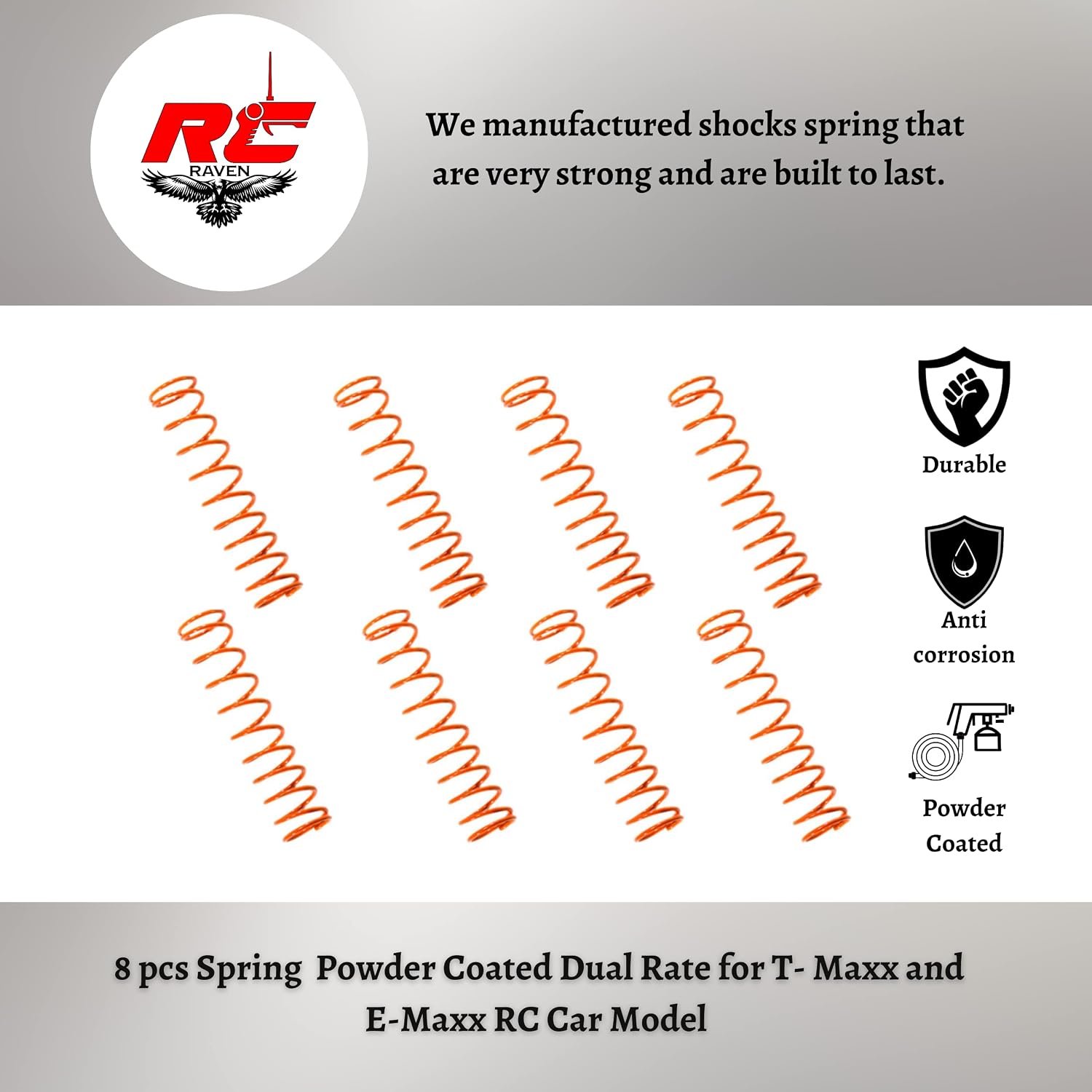
8 pcs RC Shocks Spring Orange Powder Coated for RC Car T- Maxx and E-Maxx with a Dual Rate of 3 ppi on top and 7 ppi at The Bottom- RC Car Shock Springs
Product details
| Management number | 229237560 | Release Date | 2026/05/31 | List Price | US$8.78 | Model Number | 229237560 | ||
|---|---|---|---|---|---|---|---|---|---|
| Category | |||||||||
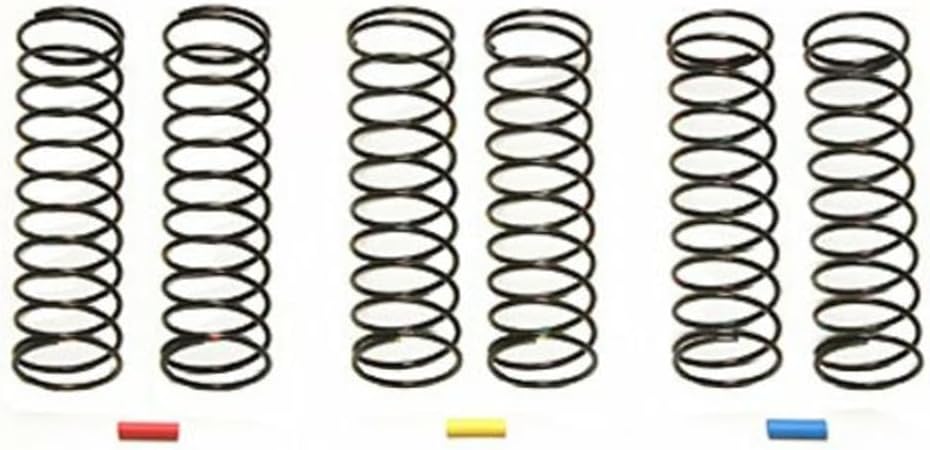
RC Raven RC Shocks Spring Orange Powder Coated Dual Rate for T- Maxx and E- Maxx RC Car Model Your searching is over! We've got you covered!All of our RC Car Shocks Spring set are made of high-quality steel and manufactured by high-temperature powder-coated paint.Our premium-quality RC Car Spring can be used in remodeling, beautification, and upgrading accessory parts. You can now change your cheap shock springs from your RC Car model T- Maxx and E-Maxx. Since they are powder coated, they provide long-lasting durability compared to other common springs.All our RC Shocks Spring is made of high-quality material. They are manufactured and engineered properly, every corner is proven and tested for great performance. Worry no more about their durability and hold.★ Product Features: ✔️ You will receive high quality 8 sets of RC Shocks Spring Powder Coated (Orange)✔️ Famous dual rate of 3 ppi on top and 7 ppi at the bottom✔️ Strong and provide extensive performance✔️ Durable★ These are 100% manufactured in the USA and will sell out quickly.!!
- Famous dual rate shock springs for RC Car T- Max and E-Max with a dual-rate of 3 ppi on top and 7 ppi at the bottom.
- These stiff shocks can provide both a smooth ride at low speeds and a stable ride at high speeds. A dual-rate spring will provide a much better rate of transition when the spring is under compression and hard load.
- Increase your performance rate and looks of your T-Maxx and E-Maxx without having to purchase those expensive shocks. These springs are much more sophisticated than a typical linear spring. We manufactured RC shocks that are very strong and are built to last.
- Our shock springs are proven and tested for great performance because we used high-quality powder coated paint. Our springs can be used with or without the pre-load spacers depending on your preferred ride height.
- We stand behind all our products and ensure an amazing customer experience. We made sure they were made of high-quality material. If you're not satisfied for any reason, we've got you covered.
| UPC | 687847965701 |
|---|---|
| ASIN | B06Y15ZKYT |
| Size | Small |
| Theme | Vehicle |
| Brand Name | RC Raven |
| Manufacturer | RC Raven |
| Power Source | battery powered |
| Material Type | Steel |
| Operation Mode | Manual |
| Is Assembly Required | No |
| Age Range Description | Kid |
| Educational Objective | Construction Skills |
| Manufacturer Part Number | TMDRORANG |
| Manufacturer Minimum Age MONTHS | 120.00 |

Bestseller ranking
Chemises


Customers who viewed this product also viewed
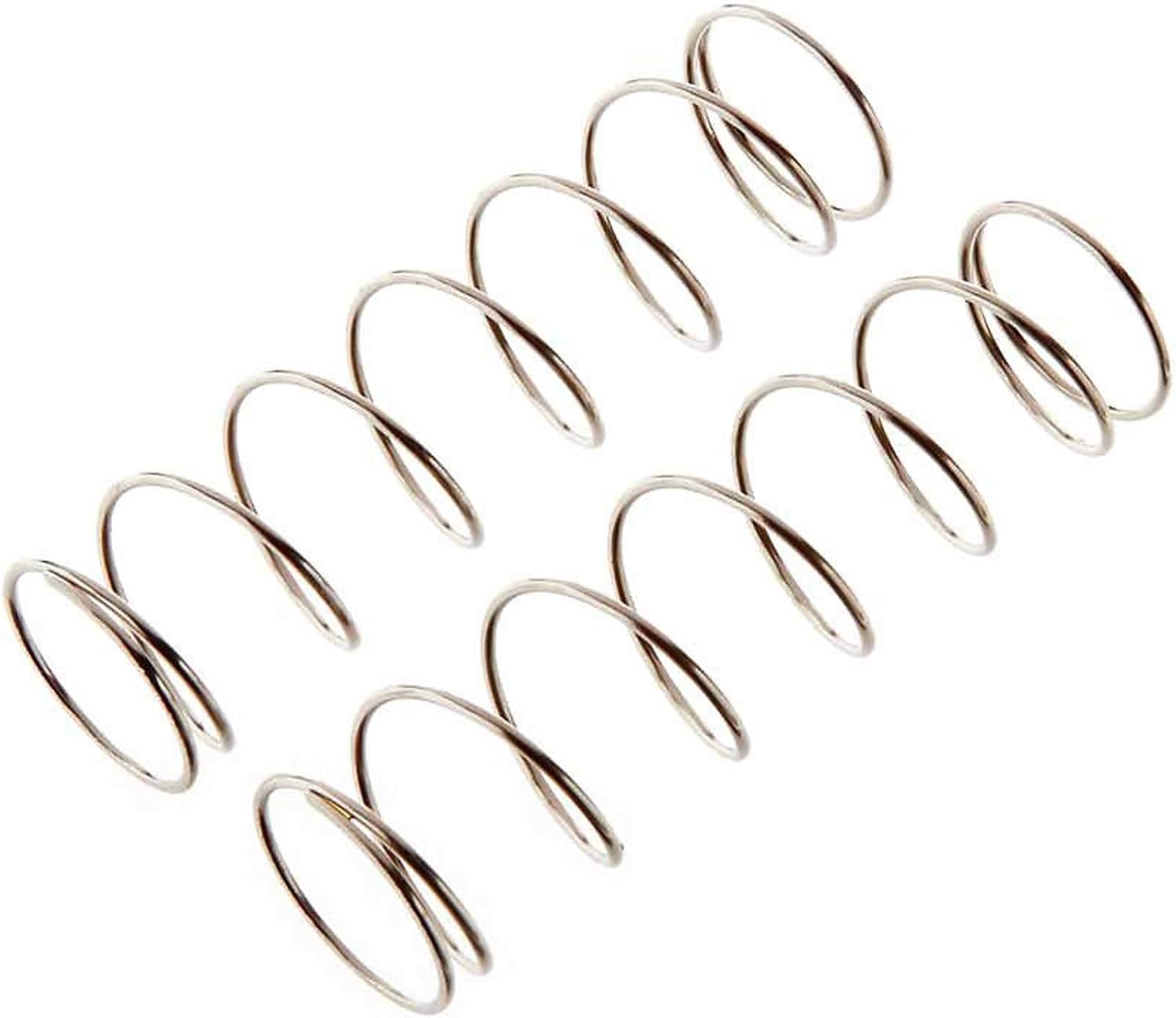
Shock Springs



Correction of product information
If you notice any omissions or errors in the product information on this page, please use the correction request form below.
Correction Request Form